John Ferren
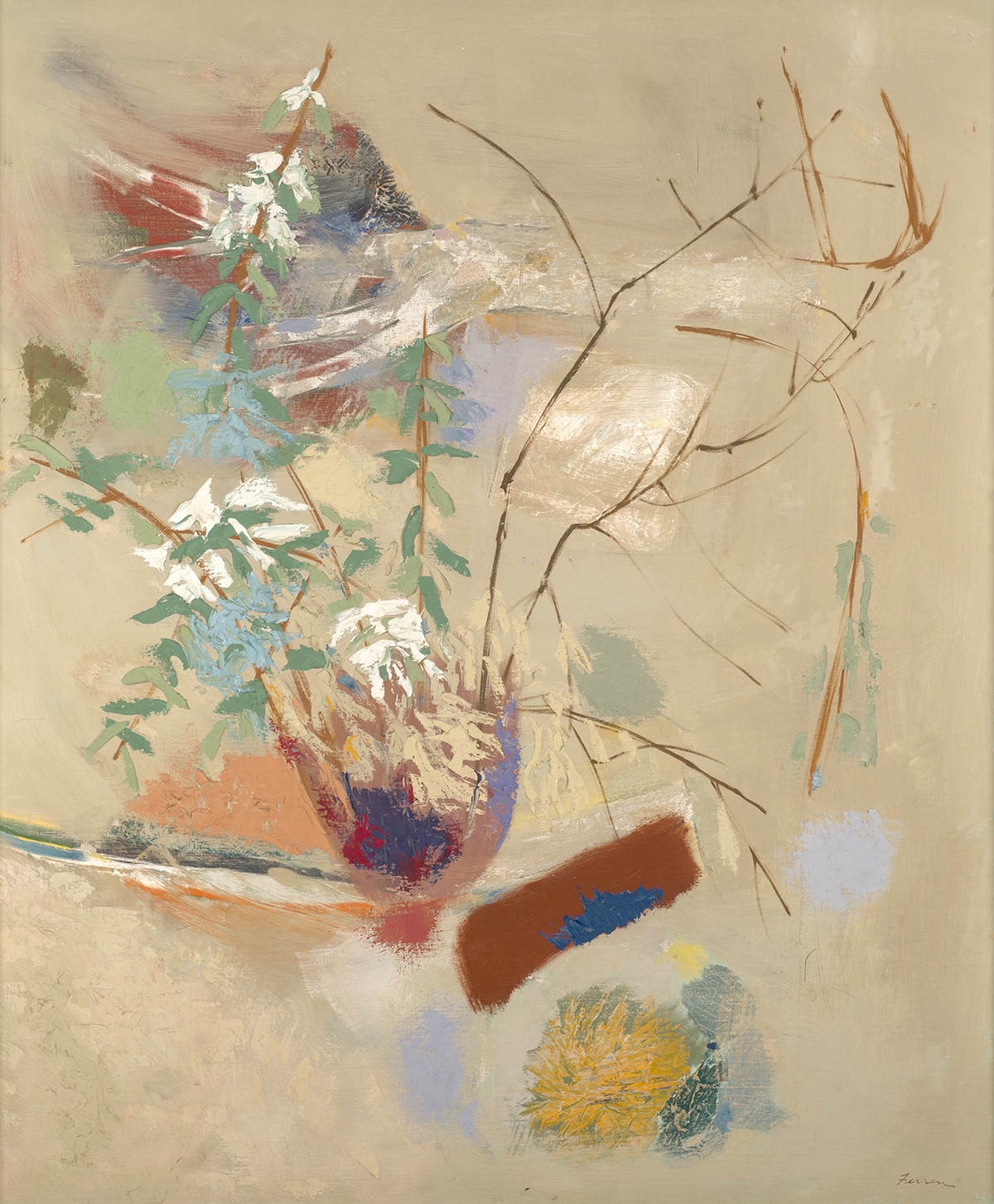
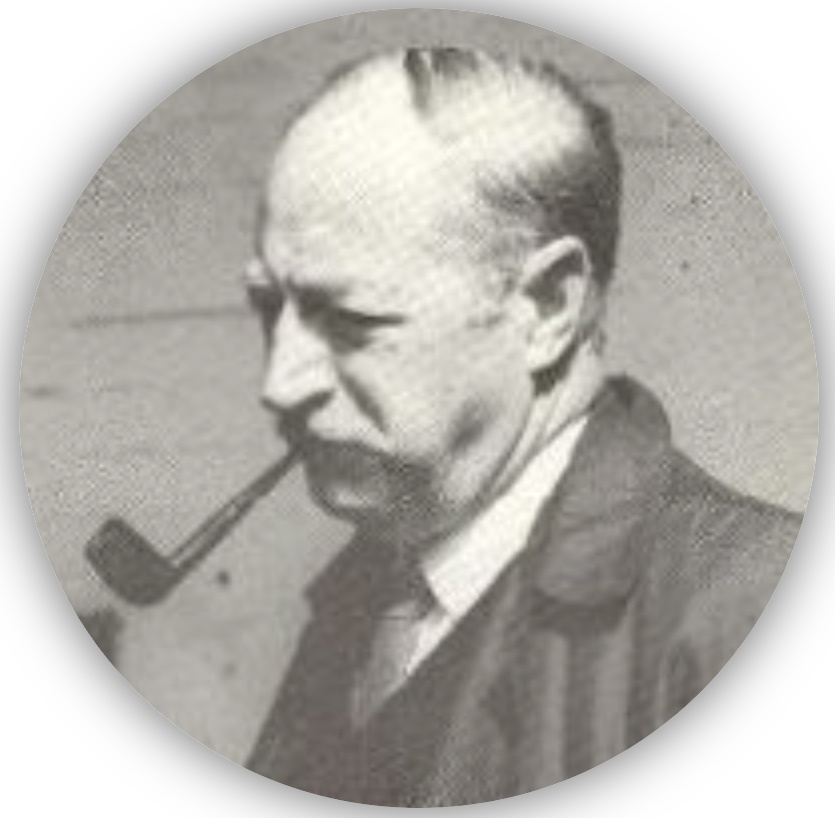
John Ferren
Born on October 17, 1905 in Pendleton, OR, he moved to San Francisco as a young man, where he briefly attended the California School of Fine Arts and apprenticed with a stonecutter. In 1929, Ferren traveled to Paris via New York, which gave him his first exposure to the works of Hans Hofmann and Henri Matisse. Though he briefly returned to the United States in 1930, the artist spent the next 8 years in Paris, falling into the circles of Pablo Picasso and Stanley William Hayter. In 1938, he once again returned to the United States. In the decades that followed, Ferren continued producing abstractions and notably created designs for Alfred Hitchcock’s film Vertigo (1958). The artist died on July 24, 1970 in Southampton, NY.
His abstractions were influenced by both Wassily Kandinsky and Zen Buddhism. Composed of floating forms within backdrops of flat color, Ferren’s paintings allude to architecture, still life, and landscape, while still remaining vague. “I placed my hand on a tree trunk [and] instantaneously felt that every element of the landscape was alive—the light, air, ground and trees,” he once wrote. “All were interrelated, living the same life and (this is important in my art) their forms were all interchangeable.” Today, his paintings are held in the collections of the Solomon R. Guggenheim Museum in New York, the Philips Collection in Washington, D.C., and the Peggy Guggenheim Collection in Venice, among others.